Jackknife truck accidents are among the most dangerous and destructive crashes on Tampa roadways. When a large commercial truck’s cab and trailer fold at an angle—resembling a partially closed pocketknife—the result is often a multi-lane obstruction that leads to catastrophic collisions. These accidents frequently occur on highways such as I-275, I-4, I-75, and the Selmon Expressway, where high speeds and heavy traffic magnify the danger.
If you or a loved one has been injured in a jackknife truck accident in Tampa, understanding why these crashes happen, who is responsible, and how compensation is pursued is essential. At Slater | Grant, we represent victims of serious truck accidents and aggressively pursue accountability against negligent drivers, trucking companies, and insurers.
This guide explains how jackknife accidents occur, why injuries are often severe, and what victims should know about protecting their rights.
Complete the free case evaluation form or call us now at 813-995-6444 to speak directly with an attorney.
What Is a Jackknife Truck Accident?
A jackknife accident occurs when a truck’s trailer swings out to the side while the cab continues forward, forming a sharp angle. Once a truck jackknifes, the driver often loses control entirely, and the trailer can sweep across multiple lanes of traffic.
Jackknife accidents commonly involve:
- Semi-trucks and tractor-trailers
- Delivery and freight trucks
- Tanker trucks
- Box trucks pulling trailers
Because of the size and weight of commercial trucks, jackknife accidents frequently result in widespread damage and serious injuries.
Why Jackknife Accidents Are So Dangerous
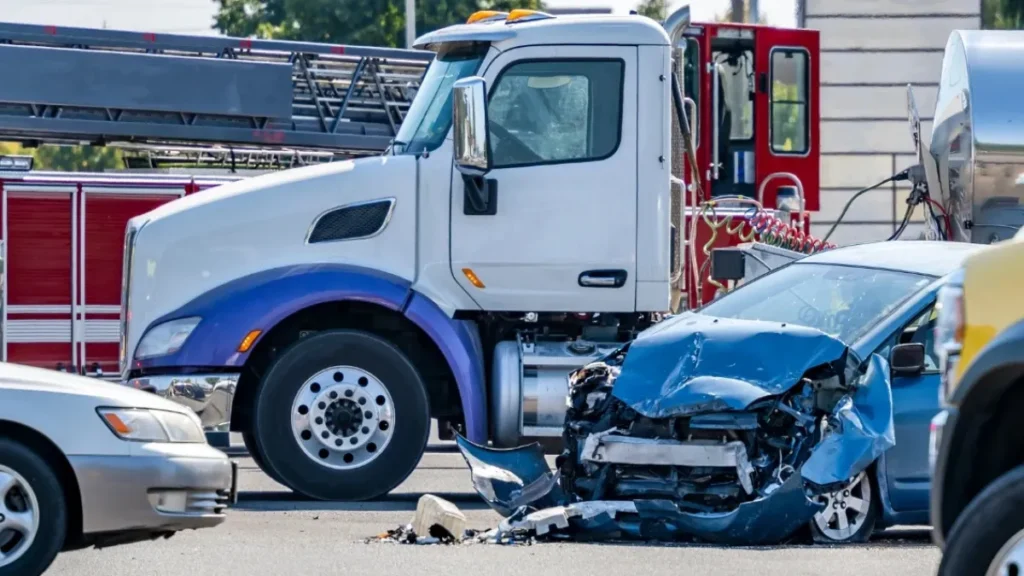
Jackknife crashes are especially hazardous due to the sheer force and unpredictability involved.
These accidents are dangerous because:
- The trailer may block several lanes of traffic
- Passenger vehicles can be crushed or pinned
- Secondary collisions often occur
- High speeds increase impact severity
- Emergency response may be delayed due to roadway blockage
Many jackknife accidents result in catastrophic injuries or fatalities.
Common Causes of Jackknife Truck Accidents in Tampa
Jackknife accidents are almost always preventable and typically result from negligence or safety failures. Common causes include:
1. Sudden Braking
When a truck brakes too hard, the trailer may continue moving forward, causing it to swing sideways.
2. Speeding
Excessive speed reduces a truck driver’s ability to stop safely, especially in traffic or poor weather.
3. Poor Weather Conditions
Rain-slick roads are a leading contributor to jackknife accidents in Florida.
4. Improper Cargo Loading
Uneven or unsecured cargo can shift during braking, destabilizing the trailer.
5. Driver Inexperience
Inexperienced drivers may not know how to respond to sudden hazards or loss of traction.
6. Mechanical Failures
Faulty brakes, worn tires, or steering issues increase the risk of jackknifing.
7. Driver Fatigue
Fatigued drivers have slower reaction times and impaired judgment.
Identifying the exact cause is critical to establishing liability.
Who May Be Liable in a Tampa Jackknife Truck Accident?
Jackknife accident cases often involve multiple responsible parties. Identifying all liable entities is essential to maximizing compensation.
1. The Truck Driver
The driver may be liable for negligent actions such as speeding, unsafe braking, or driving while fatigued.
2. The Trucking Company
Trucking companies may be responsible for:
- Inadequate driver training
- Unsafe scheduling practices
- Poor vehicle maintenance
- Failure to enforce safety regulations
3. Cargo Loading Companies
Improperly loaded or unsecured cargo can cause instability and loss of control.
4. Maintenance Providers
Companies responsible for inspecting or repairing the truck may be liable for mechanical failures.
5. Truck or Parts Manufacturers
Defective brakes, tires, or other components may contribute to jackknife accidents.
6. Other Negligent Drivers
In some cases, another driver’s sudden or reckless behavior may trigger the truck’s loss of control.
FMCSA Regulations and Jackknife Accidents
The Federal Motor Carrier Safety Administration (FMCSA) sets strict rules governing commercial trucking safety, including:
- Hours-of-service limits to prevent fatigue
- Cargo securement requirements
- Vehicle inspection and maintenance standards
- Driver training and qualification rules
Violations of FMCSA regulations can be powerful evidence of negligence in a jackknife accident claim.
Evidence Used to Prove Liability in Jackknife Accident Cases
Trucking companies and insurers act quickly after serious crashes. Preserving evidence immediately is critical.
At Slater | Grant, we gather and analyze:
- Police and crash reports
- Black box (EDR) data
- Driver logbooks and electronic logging device (ELD) records
- Truck maintenance and inspection records
- Cargo loading documents
- Dashcam and traffic camera footage
- Witness statements
- Accident reconstruction analysis
- Medical records
This evidence helps establish fault and accountability.
Common Injuries in Tampa Jackknife Truck Accidents
Due to the size and force involved, jackknife accidents often cause severe injuries, including:
- Traumatic brain injuries (TBI)
- Spinal cord injuries and paralysis
- Broken bones and crush injuries
- Internal organ damage
- Severe burns
- Permanent disability
- Wrongful death
Victims frequently require extensive medical treatment and long-term care.
Compensation Available After a Jackknife Truck Accident
If negligence is proven, injured victims may be entitled to substantial compensation, including:
Economic Damages
- Emergency medical treatment
- Hospitalization and surgeries
- Rehabilitation and therapy
- Lost wages
- Loss of future earning capacity
- Ongoing medical care
- Property damage
Non-Economic Damages
- Pain and suffering
- Emotional distress
- Loss of enjoyment of life
- Permanent impairment
- Disfigurement
Punitive Damages
May apply in cases involving reckless conduct or repeated safety violations.
Why Insurance Companies Fight Jackknife Accident Claims
Jackknife truck accident claims often involve significant damages and corporate liability. Insurance companies may attempt to:
- Shift blame to other drivers
- Minimize safety violations
- Dispute injury severity
- Delay investigations
- Push quick settlements
Experienced legal representation is essential to counter these tactics.
How Slater | Grant Handles Jackknife Truck Accident Cases
At Slater | Grant, we take an aggressive and strategic approach to truck accident litigation. We:
- Launch immediate investigations
- Preserve critical trucking evidence
- Work with accident reconstruction and trucking safety experts
- Identify all liable parties
- Handle all insurance communications
- Calculate the full value of damages
- Negotiate aggressively or proceed to trial
Our goal is to secure maximum compensation and accountability.

Why Choose Slater | Grant?
Jackknife accident cases demand experience, resources, and determination. Slater | Grant offers:
- Extensive experience with serious truck accident cases
- Deep knowledge of FMCSA regulations
- Aggressive legal advocacy
- Personalized client support
- Trial-ready representation
- No upfront fees — you pay only if we win
We fight for victims when trucking negligence causes devastating harm.
Take the First Step Toward Justice
If you or a loved one has been injured in a jackknife truck accident in Tampa, don’t face trucking companies and insurers alone.
Start by completing the free case evaluation form or calling us now at 813-995-6444.
Slater | Grant is ready to fight for accountability, justice, and the compensation you deserve.
Sources
1. Federal Motor Carrier Safety Administration (FMCSA)
Commercial trucking safety regulations and cargo securement rules.
https://www.fmcsa.dot.gov
2. National Highway Traffic Safety Administration (NHTSA)
Research on large truck crashes and injury severity.
https://www.nhtsa.gov
3. Insurance Institute for Highway Safety (IIHS)
Studies on truck crash causation and roadway safety.
https://www.iihs.org
4. Florida Highway Safety and Motor Vehicles (FLHSMV)
Crash data and commercial vehicle safety information.
https://www.flhsmv.gov