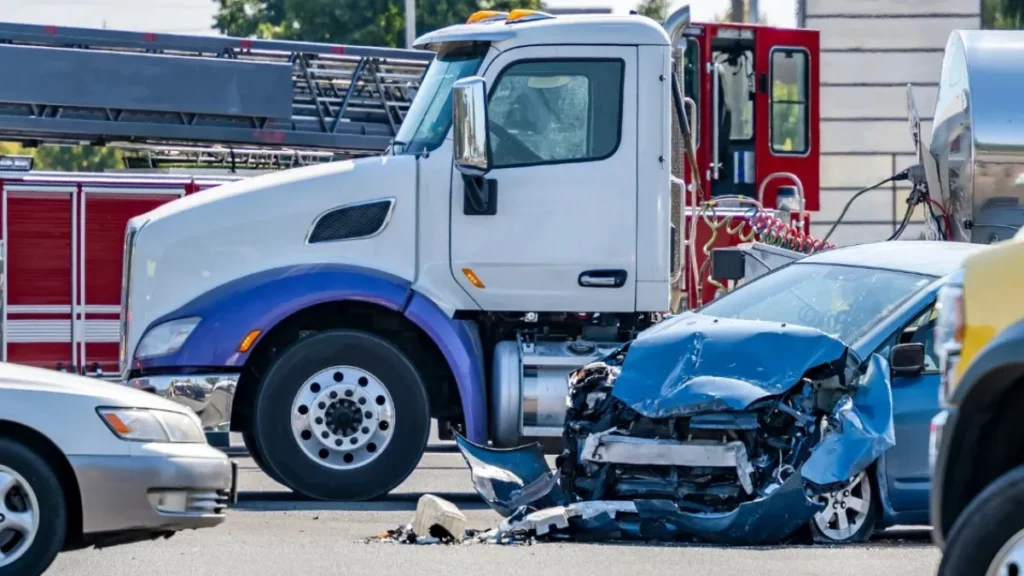
Multi-vehicle accidents—often called chain-reaction crashes or pileups—are among the most complex personal injury cases in Tampa. These accidents frequently occur on heavily traveled roadways such as I-275, I-4, I-75, Dale Mabry Highway, and the Selmon Expressway, where dense traffic, high speeds, and sudden stops can trigger a domino effect involving multiple vehicles.
If you were injured in a multi-vehicle accident in Tampa, determining who is legally responsible can be extremely challenging. Insurance companies often dispute fault, shift blame, or attempt to minimize payouts by exploiting the complexity of these cases. At Slater | Grant, we help accident victims untangle liability, protect their rights, and pursue the full compensation they deserve.
This article explains how multi-vehicle accidents happen, how liability is determined, and what injured victims should know before speaking with insurance companies.
Complete the free case evaluation form or call us now at 813-995-6444 to speak directly with an attorney.
What Is a Multi-Vehicle (Chain-Reaction) Accident?
A multi-vehicle accident involves three or more vehicles and typically begins with an initial collision that triggers subsequent crashes. These accidents often occur when:
- Traffic suddenly slows or stops
- A distracted or speeding driver fails to brake in time
- Weather or road conditions reduce traction or visibility
- Vehicles are following too closely
Once the first impact occurs, other drivers may have little or no time to react.
Why Multi-Vehicle Accidents Are So Dangerous
Chain-reaction crashes are especially dangerous because:
- Vehicles may be struck multiple times
- Occupants experience repeated impacts
- Secondary collisions often cause severe injuries
- Emergency response may be delayed due to blocked roadways
- Liability disputes slow compensation
Victims frequently suffer serious or permanent injuries even if their vehicle was not involved in the initial impact.
Common Causes of Multi-Vehicle Accidents in Tampa
Most chain-reaction crashes are preventable and caused by negligence. Common causes include:
1. Distracted Driving
Drivers texting or looking away from the road may not notice slowing traffic.
2. Speeding
Higher speeds reduce stopping distance and increase collision severity.
3. Tailgating
Following too closely leaves no margin for sudden stops.
4. Sudden or Unsafe Lane Changes
Abrupt lane shifts can force other drivers to brake or swerve.
5. Poor Weather Conditions
Rain-slick roads are a major contributor to pileups in Florida.
6. Driver Fatigue
Drowsy drivers have slower reaction times.
7. Construction Zones
Narrow lanes and unexpected traffic changes often trigger chain reactions.
Understanding what caused the initial collision is critical in assigning liability.
Who Is Liable in a Tampa Multi-Vehicle Accident?
Liability in multi-vehicle accidents is rarely straightforward. One or more parties may be responsible, including:
1. The Driver Who Caused the Initial Collision
In many cases, the driver who triggered the first impact bears primary responsibility.
2. Multiple Negligent Drivers
Several drivers may share fault if they were speeding, distracted, or following too closely.
3. Commercial Drivers or Employers
If a delivery truck or commercial vehicle was involved, the employer may share liability.
4. Construction Companies or Government Entities
Unsafe road conditions, missing signage, or poor traffic control may contribute to the crash.
5. Vehicle Manufacturers
Defective brakes, tires, or safety systems may play a role in some cases.
Florida’s comparative negligence system allows fault to be divided among multiple parties.
How Fault Is Determined in Chain-Reaction Crashes
Determining fault requires a detailed investigation. Insurance companies often attempt to oversimplify these cases, but Slater | Grant digs deeper.
Key factors include:
- Sequence of impacts
- Vehicle positions
- Speed and braking behavior
- Road and weather conditions
- Driver distraction or impairment
The goal is to identify who caused which collision and why.
Evidence Used in Multi-Vehicle Accident Claims
Because liability is disputed, strong evidence is essential. At Slater | Grant, we collect and analyze:
Police Crash Reports
Often include diagrams, statements, and preliminary fault assessments.
Traffic and Surveillance Camera Footage
May capture the initial collision and subsequent impacts.
Vehicle Black Box (EDR) Data
Shows speed, braking, and throttle input before impact.
Dashcam Footage
Increasingly valuable in chain-reaction cases.
Witness Statements
Independent witnesses help establish the sequence of events.
Vehicle Damage Analysis
Damage patterns reveal direction, timing, and severity of impacts.
Cell Phone Records
Used to prove distraction at the time of the crash.
Accident Reconstruction
Experts recreate the crash to determine fault accurately.
Common Injuries in Tampa Multi-Vehicle Accidents
Due to multiple impacts, victims often suffer serious injuries, including:
- Traumatic brain injuries (TBI)
- Spinal cord injuries
- Whiplash and neck injuries
- Broken bones
- Internal organ damage
- Soft tissue injuries
- Permanent disability
Many injuries worsen over time and require long-term treatment.
Compensation Available to Multi-Vehicle Accident Victims
Injured victims may be entitled to compensation for:
Economic Damages
- Emergency medical care
- Hospitalization and surgeries
- Physical therapy and rehabilitation
- Lost wages
- Loss of future earning capacity
- Ongoing medical treatment
- Property damage
Non-Economic Damages
- Pain and suffering
- Emotional distress
- Loss of enjoyment of life
- Permanent impairment
- Disfigurement
Punitive Damages
May apply in cases involving reckless or grossly negligent conduct.
Why Insurance Companies Complicate Multi-Vehicle Claims
Insurers often attempt to:
- Shift blame between drivers
- Minimize each driver’s percentage of fault
- Delay investigations
- Pressure victims to accept partial settlements
Without legal representation, victims may unknowingly accept less than they deserve.
How Slater | Grant Handles Multi-Vehicle Accident Cases
At Slater | Grant, we take a methodical, aggressive approach to chain-reaction crash claims. We:
- Launch immediate investigations
- Preserve video and electronic evidence
- Work with accident reconstruction experts
- Identify all liable parties and insurance policies
- Handle all insurance communications
- Accurately calculate total damages
- Negotiate aggressively or take cases to trial
Our focus is full accountability and maximum recovery.
Why Choose Slater | Grant?
Multi-vehicle accident cases demand experience, resources, and precision. Slater | Grant offers:
- Extensive experience with complex liability cases
- Aggressive legal advocacy
- Personalized client support
- Trial-ready preparation
- No upfront fees — you pay only if we win
We fight for clarity, justice, and results.
Take the First Step Toward Compensation
If you were injured in a multi-vehicle accident in Tampa, don’t let insurance companies decide fault on their terms.
Start by completing the free case evaluation form or call us now at 813-995-6444.
Slater | Grant is ready to fight for the compensation you deserve.
Sources
1. Florida Highway Safety and Motor Vehicles (FLHSMV)
Crash data, reporting standards, and traffic safety information.
https://www.flhsmv.gov
2. National Highway Traffic Safety Administration (NHTSA)
Research on chain-reaction crashes and injury severity.
https://www.nhtsa.gov
3. Insurance Institute for Highway Safety (IIHS)
Studies on crash causation and multi-vehicle accidents.
https://www.iihs.org
4. Florida Statutes – Comparative Negligence Law
Legal framework for shared fault and injury claims.
https://www.leg.state.fl.us