Rear-end collisions are the most common type of car accident in Tampa, occurring daily on congested roads like I-275, Dale Mabry Highway, Hillsborough Avenue, Bayshore Boulevard, and the Selmon Expressway. Many people assume that the rear driver is always at fault—but that is not always true. In reality, rear-end accident claims can be far more complex, especially when sudden stops, mechanical failures, or reckless behavior by the front driver are involved.
If you were injured in a rear-end collision in Tampa, understanding when the front driver may not be at fault—and how liability is determined—can make a significant difference in your ability to recover compensation. At Slater | Grant, we help accident victims challenge unfair assumptions and pursue the full compensation they deserve.
Complete the free case evaluation form or call us now at 813-995-6444 to speak directly with an attorney.
Why Rear-End Collisions Are Often Misunderstood
Florida law generally presumes that the driver who rear-ends another vehicle was following too closely or not paying attention. However, this is a rebuttable presumption, meaning it can be challenged with evidence.
In many cases, the front driver may share fault—or be primarily responsible—depending on how the accident occurred.
Rear-end crashes frequently result in serious injuries, even at low speeds, which is why insurers fight these claims aggressively.
Common Injuries in Tampa Rear-End Accidents
Rear-end collisions often cause injuries that worsen over time, including:
- Whiplash and neck injuries
- Herniated or bulging discs
- Spinal cord injuries
- Traumatic brain injuries (TBI)
- Shoulder and back injuries
- Soft tissue damage
- Chronic pain conditions
Because symptoms may not appear immediately, victims are often accused of exaggerating injuries—another reason legal representation is critical.
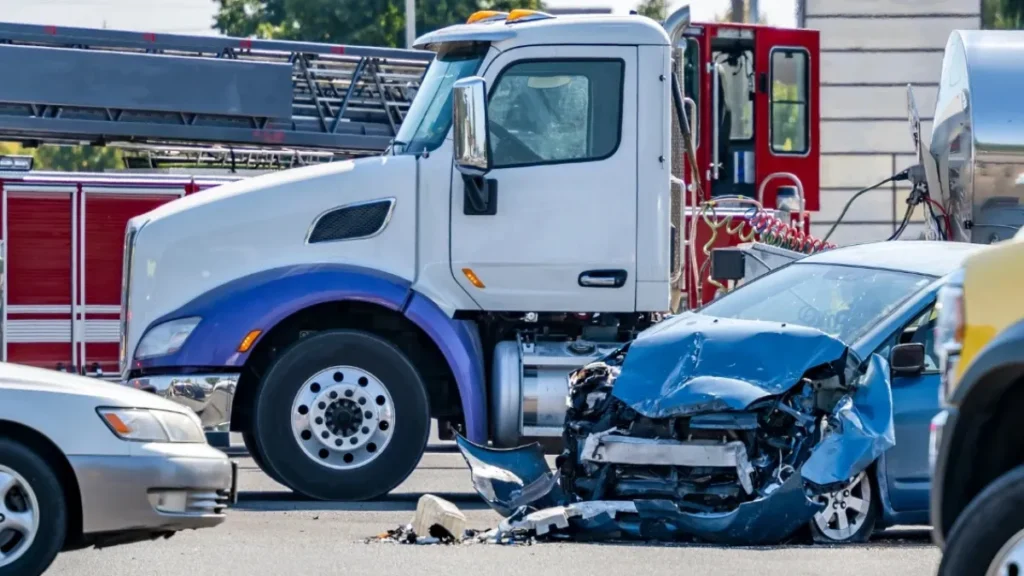
When the Front Driver May Not Be at Fault
While many rear-end crashes are caused by tailgating or distraction, there are several scenarios where the front driver may share or avoid fault altogether.
1. Sudden or Unnecessary Braking
If the front driver slams on their brakes without a valid reason—such as:
- Brake-checking
- Road rage
- Intentionally causing a collision
they may share or bear liability.
2. Brake Light Failure
If a vehicle’s brake lights are not functioning properly, the rear driver may not have adequate warning to stop safely. Fault may shift to:
- The front driver
- A vehicle maintenance provider
- A manufacturer (in defect cases)
3. Unsafe Lane Changes
If the front driver suddenly cuts into traffic and brakes immediately, they may be responsible for the crash.
4. Reversing Into Another Vehicle
Accidents involving vehicles backing up—such as in traffic or at intersections—are not traditional rear-end collisions, and liability often rests with the reversing driver.
5. Mechanical Failure
If the front driver’s vehicle experiences a sudden mechanical issue—such as engine failure or stalling—without warning lights or signals, fault may be disputed.
6. Multi-Vehicle Chain-Reaction Crashes
In pileups, the driver who caused the initial collision may be responsible for multiple rear-end impacts.
7. Roadway Hazards or Obstructions
If debris, sudden construction lane closures, or unsafe road conditions caused abrupt stopping, third parties—including government entities—may share liability.
How Fault Is Determined in Tampa Rear-End Accident Claims
Fault is determined using negligence principles and Florida’s comparative negligence system. Key factors include:
- Driver behavior
- Traffic conditions
- Vehicle condition
- Roadway environment
At Slater | Grant, we analyze every detail to ensure fault is assigned fairly.
Evidence Used to Challenge Rear-End Fault Assumptions
Insurance companies often rely on assumptions. We rely on evidence.
Our team gathers and analyzes:
Police Crash Reports
Officers may note sudden braking, mechanical issues, or road hazards.
Vehicle Damage Analysis
Damage patterns help determine speed, angle, and braking behavior.
Black Box (EDR) Data
Vehicle data may show braking force, speed, and reaction time.
Dashcam and Surveillance Footage
Video evidence often disproves insurer narratives.
Witness Statements
Independent witnesses may confirm unsafe actions by the front driver.
Maintenance and Repair Records
Used to identify brake failures or mechanical defects.
Cell Phone Records
May reveal distracted driving by either driver.
Accident Reconstruction
Experts recreate the collision to determine fault accurately.
Florida’s Comparative Negligence Law
Florida follows a modified comparative negligence rule:
- You may recover compensation if you are 50% or less at fault
- Your compensation is reduced by your percentage of fault
Insurance companies often exaggerate victim fault to reduce payouts. Slater | Grant aggressively challenges these tactics.
Compensation Available After a Tampa Rear-End Collision
If negligence is established, victims may recover compensation for:
Economic Damages
- Emergency medical treatment
- Diagnostic imaging
- Physical therapy
- Lost wages
- Loss of future earning capacity
- Ongoing medical care
- Vehicle repair or replacement
Non-Economic Damages
- Pain and suffering
- Emotional distress
- Loss of enjoyment of life
- Permanent impairment
- Chronic pain
Punitive Damages
May apply in cases involving road rage, reckless behavior, or intentional misconduct.
Why Insurance Companies Push Quick Settlements
Rear-end collision claims are often undervalued because insurers:
- Assume minimal injuries
- Claim injuries are “soft tissue only”
- Argue delayed treatment means no injury
- Push early settlements before symptoms worsen
Accepting a quick settlement can permanently limit your recovery.
How Slater | Grant Protects Rear-End Accident Victims
At Slater | Grant, we fight unfair assumptions and build evidence-based claims by:
- Conducting immediate investigations
- Preserving electronic and video evidence
- Working with medical and accident experts
- Handling all insurance communications
- Accurately valuing long-term injuries
- Negotiating aggressively
- Preparing cases for trial if necessary
We focus on results—not shortcuts.
Why Choose Slater | Grant?
Rear-end accident claims require attention to detail and aggressive advocacy. Slater | Grant offers:
- Extensive experience with disputed liability cases
- Strategic legal representation
- Personalized client support
- Trial-ready preparation
- No upfront fees — you pay only if we win
Your recovery and future matter.
Take the First Step Toward Fair Compensation
If you were injured in a rear-end collision in Tampa, don’t let insurance companies decide fault without a fight. Get experienced legal help today.
Start by completing the free case evaluation form or calling us now at 813-995-6444.
Slater | Grant is ready to protect your rights and pursue the compensation you deserve.
Sources
1. Florida Highway Safety and Motor Vehicles (FLHSMV)
Crash data, rear-end collision statistics, and reporting guidelines.
https://www.flhsmv.gov
2. National Highway Traffic Safety Administration (NHTSA)
Research on rear-end crashes, following distance, and injury mechanisms.
https://www.nhtsa.gov
3. Insurance Institute for Highway Safety (IIHS)
Studies on crash causation, braking systems, and vehicle safety.
https://www.iihs.org
4. Florida Statutes – Negligence & Comparative Fault
Legal standards governing fault and personal injury recovery.
https://www.leg.state.fl.us