Rear-end accidents involving commercial trucks are significantly more dangerous than standard car-to-car collisions. In Tampa, where tractor-trailers and delivery trucks dominate roadways like I-4, I-75, I-275, the Selmon Expressway, and Dale Mabry Highway, a single moment of inattention by a truck driver can lead to catastrophic injuries for occupants of smaller vehicles.
Because of the massive size and weight of commercial trucks, rear-end truck accidents often cause life-altering injuries, permanent disabilities, or fatalities. These cases are also legally complex, involving trucking companies, federal regulations, and high-limit insurance policies. At Slater | Grant, we represent victims of serious truck accidents and fight aggressively to hold negligent drivers and trucking companies fully accountable.
This article explains why rear-end truck accidents happen, who may be liable, and how injured victims can protect their legal rights.
Complete the free case evaluation form or call us now at 813-995-6444 to speak directly with an attorney.
Why Rear-End Truck Accidents Are So Dangerous
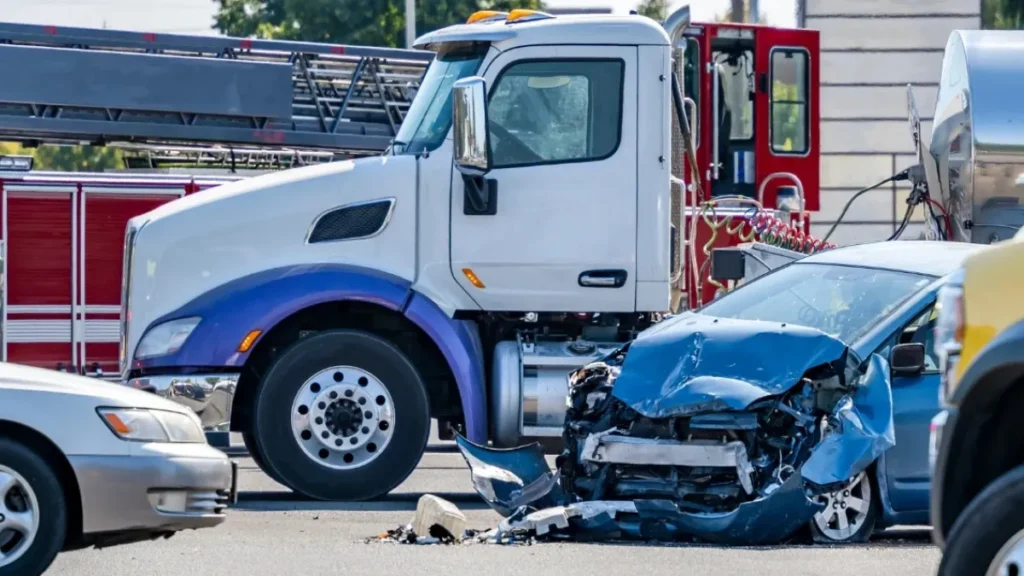
A fully loaded commercial truck can weigh up to 80,000 pounds. When a truck rear-ends a passenger vehicle, the force involved is devastating.
Rear-end truck accidents are especially dangerous because:
- Passenger vehicles absorb massive impact forces
- Smaller vehicles may be crushed or pushed under the truck
- Multiple vehicles are often involved
- Secondary impacts increase injury severity
- Occupants have little chance to brace for impact
Even low-speed rear-end truck collisions can cause catastrophic injuries.
Common Causes of Rear-End Truck Accidents in Tampa
Most rear-end truck accidents are preventable and caused by negligence. Common causes include:
1. Driver Fatigue
Truck drivers often work long hours under tight delivery schedules, leading to delayed reaction times.
2. Distracted Driving
Texting, dispatch communications, GPS use, or eating while driving diverts attention.
3. Following Too Closely
Trucks require far greater stopping distances than passenger vehicles.
4. Speeding
Excessive speed dramatically increases stopping distance and crash severity.
5. Brake Failure or Mechanical Issues
Poor maintenance can lead to brake failures or delayed stopping.
6. Improper Training
Inexperienced drivers may fail to anticipate traffic slowdowns.
7. Weather Conditions
Rain-slick roads increase stopping distances for heavy trucks.
Identifying the cause of the crash is essential to determining liability.
Who May Be Liable in a Tampa Rear-End Truck Accident?
Rear-end truck accident claims often involve multiple responsible parties, including:
1. The Truck Driver
Drivers may be liable for fatigue, distraction, speeding, or unsafe following distance.
2. The Trucking Company
Trucking companies may be responsible for:
- Unsafe scheduling practices
- Failure to train drivers
- Neglecting vehicle maintenance
- Violating federal safety regulations
3. Maintenance or Repair Companies
Third-party contractors may share liability for mechanical failures.
4. Truck or Parts Manufacturers
Defective brakes, tires, or safety systems may contribute to rear-end collisions.
5. Other Negligent Drivers
Another motorist’s reckless actions may trigger sudden traffic stops.
Identifying all liable parties is critical to maximizing compensation.
Federal Trucking Regulations and Rear-End Liability
Commercial trucking is regulated by the Federal Motor Carrier Safety Administration (FMCSA). These regulations include:
- Hours-of-service rules
- Mandatory vehicle inspections
- Brake performance standards
- Driver qualification requirements
Violations of FMCSA regulations can provide powerful evidence of negligence in rear-end truck accident cases.
What to Do After a Rear-End Truck Accident in Tampa
The steps you take after a rear-end truck accident can significantly impact your claim.
1. Call 911 Immediately
A police report is critical for documenting the crash and identifying the trucking company.
2. Seek Immediate Medical Care
Truck accident injuries are often severe and may worsen over time.
3. Document the Scene
If possible, take photos of:
- Vehicle damage
- Truck company markings and DOT numbers
- Skid marks
- Road conditions
4. Gather Witness Information
Witnesses may confirm unsafe driving or sudden stops.
5. Avoid Speaking With Trucking Company Insurers
Do not give recorded statements without legal representation.
6. Contact a Tampa Truck Accident Attorney
Early legal involvement helps preserve critical evidence.
Evidence Used to Prove Rear-End Truck Accident Claims
Trucking companies act quickly after crashes. At Slater | Grant, we move faster.
We collect and analyze:
- Police crash reports
- Driver logbooks and ELD data
- Truck black box (EDR) data
- Maintenance and inspection records
- Dashcam and traffic camera footage
- Witness statements
- Accident reconstruction analysis
- Medical records
This evidence is critical to proving negligence and liability.
Common Injuries in Tampa Rear-End Truck Accidents
Rear-end truck collisions often cause catastrophic injuries, including:
- Traumatic brain injuries (TBI)
- Spinal cord injuries and paralysis
- Severe neck and back injuries
- Crush injuries
- Internal organ damage
- Broken bones
- Permanent disability
- Wrongful death
Victims often require long-term medical care and rehabilitation.
Compensation Available After a Rear-End Truck Accident
Injured victims may be entitled to substantial compensation, including:
Economic Damages
- Emergency medical treatment
- Hospitalization and surgeries
- Rehabilitation and therapy
- Lost wages
- Loss of future earning capacity
- Ongoing medical care
Non-Economic Damages
- Pain and suffering
- Emotional distress
- Loss of enjoyment of life
- Permanent impairment
Punitive Damages
May apply if the trucking company or driver acted with reckless disregard for safety.
Why Insurance Companies Fight Rear-End Truck Accident Claims
Truck accident claims often involve high-value damages. Insurers may attempt to:
- Shift blame to the victim
- Minimize safety violations
- Dispute injury severity
- Delay claims
- Push low settlement offers
Experienced legal representation is essential.

How Slater | Grant Handles Rear-End Truck Accident Cases
At Slater | Grant, we aggressively pursue justice by:
- Launching immediate investigations
- Preserving trucking and electronic evidence
- Working with accident reconstruction experts
- Identifying all liable parties
- Handling all insurance communications
- Accurately valuing damages
- Negotiating aggressively or taking cases to trial
Our mission is accountability and maximum compensation.
Why Choose Slater | Grant?
Rear-end truck accident cases require experience, resources, and determination. Slater | Grant offers:
- Extensive trucking accident litigation experience
- Deep knowledge of FMCSA regulations
- Aggressive legal advocacy
- Personalized client support
- Trial-ready representation
- No upfront fees — you pay only if we win
We fight for victims when powerful trucking companies cause harm.
Take the First Step Toward Justice
If you or a loved one was injured in a rear-end truck accident in Tampa, do not face trucking companies and insurers alone.
Start by completing thefree case evaluation form or call us now at 813-995-6444.
Slater | Grant is ready to fight for your recovery, your rights, and your future.
Sources
1. Federal Motor Carrier Safety Administration (FMCSA)
Rear-end truck crash regulations and safety standards.
https://www.fmcsa.dot.gov
2. Florida Highway Safety and Motor Vehicles (FLHSMV)
Commercial vehicle crash statistics.
https://www.flhsmv.gov
3. National Highway Traffic Safety Administration (NHTSA)
Research on large truck rear-end collisions.
https://www.nhtsa.gov
4. TruckLawyer.Law
Truck accident causes.
https://trucklawyer.law/truck-accident-cause/